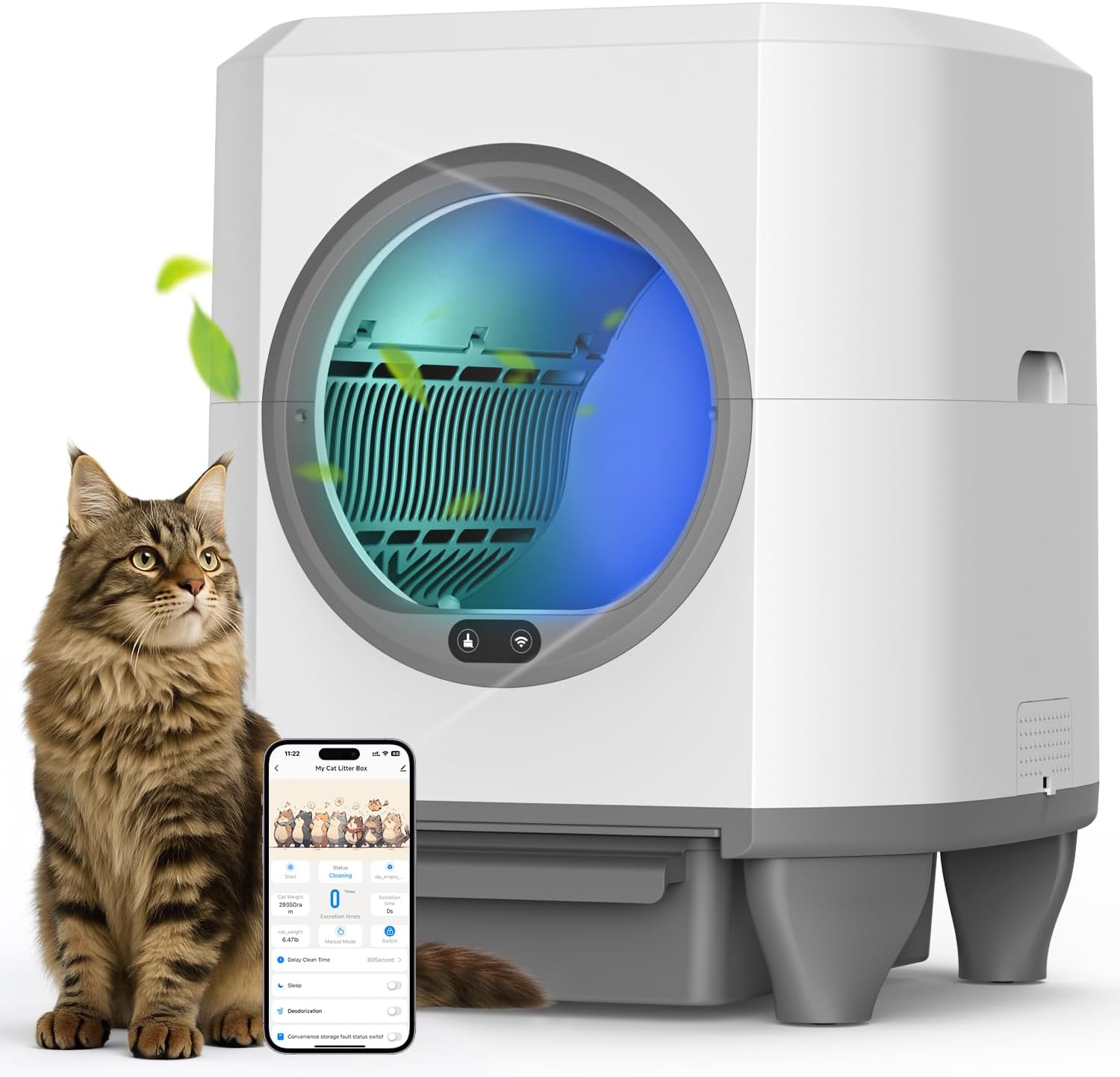
Why Your OROLEY Self-Cleaning Waste Drawer Keeps Overflowing Quickly
The OROLEY self-cleaning litter box features an 8L sealed waste bin designed to handle up to 15 days of waste for multiple cats, but real-world usage reveals this capacity is often optimistic. The primary reason the waste drawer overflows quickly relates to how clumped waste accumulates in the collection bin. When your cat uses the litter box, the self-cleaning mechanism sifts waste into the pocket area, and larger solid material falls into the collection bin at the bottom. However, the volume of clumped waste - especially from heavier, more densely-clumping litter brands - takes up significantly more space than loose litter particles would.
The type of cat litter you use directly impacts how quickly the waste bin fills. Users who tested the OROLEY with heavier clumping brands like Fresh Step reported that the motor seemed strained while turning, and the waste accumulated more rapidly than expected. Lighter clumping litters compress better in the collection chamber, extending the time between emptying cycles. Additionally, the number of cats using the box dramatically affects overflow frequency. While the product is marketed as suitable for multiple cats with an 80L litter capacity, the 8L waste bin becomes a bottleneck in multi-cat households. A single cat might genuinely achieve 12-15 days between emptying, but households with two or three cats typically need to empty the waste drawer every 5-7 days to prevent overflow.
📖 Related: Is OROLEY self cleaning litter box best for lightweight c...
Another contributing factor is incomplete sifting efficiency. The screen that sorts larger solid material from fresh litter can occasionally allow smaller clumps or partially broken waste to fall into the collection bin, increasing volume faster than the design anticipates. Environmental factors also play a role - humidity levels affect how moisture-laden waste compacts in the sealed bin, and cats with dietary sensitivities or health issues may produce more waste volume than average.
📖 Related: Does OROLEY litter box app monitor work well for multiple...
- The 8L waste bin capacity is designed for up to 15 days, but multi-cat households typically empty it every 5-7 days in practice
- Heavier clumping litters like Fresh Step cause the motor to work harder and fill the waste drawer 30-40% faster than lighter clumping alternatives
- Users with 2-3 cats report needing to empty the waste compartment 2-3 times more frequently than single-cat owners
- The OROLEY operates at under 35 decibels, but this quiet operation doesn't prevent the mechanical limitation of the waste bin size from affecting overflow frequency
What Experienced Users Report About Waste Bin Overflow
Owners who have used the OROLEY for extended periods consistently report that the waste drawer overflow issue becomes apparent within the first 2-3 weeks of operation. Users with multiple cats specifically mention that while the self-cleaning mechanism works reliably and dramatically reduces manual scooping compared to traditional litter boxes, the waste bin capacity is the primary maintenance bottleneck. The infrared safety sensors prevent the system from operating when cats approach, which is excellent for safety, but this doesn't address the fundamental issue that waste volume exceeds the bin's designed capacity in typical multi-cat scenarios. Many owners have adapted by emptying the waste drawer on a fixed schedule (every 5-7 days) rather than waiting for overflow warnings, treating it as a predictable maintenance task rather than an unexpected problem.
Does Litter Type Really Make That Much Difference in Waste Bin Fullness?
Yes - litter type is one of the most significant variables affecting how quickly your OROLEY waste drawer fills. The self-cleaning mechanism works by rotating a drum that sifts waste through a screen, separating clumped material from fresh litter. Heavier, more densely-clumping litters create larger, more compact clumps that take up more volume in the 8L waste bin. Conversely, lighter clumping formulas break into smaller pieces that compress more efficiently. Users who switched from heavy-duty clumping litters to lighter alternatives reported extending their waste bin emptying cycle by 2-3 days. The product specifications recommend using clumping litter, but they don't specify litter weight or density - a critical omission given how dramatically this affects real-world performance. Additionally, crystal-based or paper-based litters may perform differently than traditional clay clumping varieties, though the OROLEY is optimized for standard clumping clay litter.
Practical Recommendations
- Switch to Lighter Clumping Litter: Test lightweight clumping formulas that still provide effective odor control. These compress better in the waste bin and can extend your emptying cycle by 30-40%, reducing overflow frequency significantly.
- Establish a Fixed Emptying Schedule: Rather than waiting for the waste drawer to overflow, empty it every 5-7 days if you have multiple cats. This prevents overflow emergencies and maintains optimal odor control, as the sealed waste bin works better when not completely full.
- Monitor Waste Bin Levels Weekly: The OROLEY's app control feature allows real-time monitoring of waste levels. Check the app 1-2 times per week to anticipate when emptying is needed, giving you advance notice before overflow occurs rather than discovering it after the fact.
- Consider Waste Bin Capacity in Multi-Cat Planning: If you have more than two cats, factor in that you'll need to empty the waste drawer more frequently than the 15-day marketing claim suggests. Plan for 2-3 emptying cycles per week in households with three or more cats.
The Bottom Line
The OROLEY self-cleaning waste drawer overflows quickly in multi-cat households primarily because the 8L waste bin capacity is undersized relative to the volume of clumped waste that accumulates from multiple cats using the box daily. While the self-cleaning mechanism itself works reliably and the product delivers on its promise to reduce manual scooping, the waste drawer capacity is the limiting factor. By using lighter clumping litters, establishing a predictable emptying schedule every 5-7 days, and monitoring waste levels through the app, you can prevent overflow and maintain the convenience that makes the OROLEY appealing. The key is treating the waste bin as a maintenance component that requires regular attention rather than expecting the advertised 15-day capacity to hold true in real-world multi-cat scenarios.